But "Buffalo" isn't one experience. Living downtown in a converted loft is nothing like life in a quiet Clarence cul-de-sac or a starter home in Depew. This guide breaks down cost, housing, neighborhoods, daily life, and the tradeoffs so you can figure out which version of Buffalo actually fits you.
Key Takeaways
- Housing stays more attainable than in most large Northeastern metros, with a strong food, arts, and community scene
- Winters bring real lake-effect snow; many areas need a car for errands and commuting
- Property taxes, home age, and services differ widely between the city and suburbs
- Total housing cost (not just rent or list price) should drive neighborhood comparisons
- The right area depends on your priorities: walkability, schools, commute, or suburban space
What Is the Cost of Living and Housing Market Like in Buffalo?
Buffalo's affordability reputation holds up against regional benchmarks, but the numbers depend heavily on which measurement you're looking at.
Housing Prices and Rent
Buffalo city's median sold home price was $230,000 for the three months ending August 2026, according to Redfin's housing data. Rental figures vary by source and sample:
- Buffalo city median rent: roughly $1,600/month (Realtor.com, September 2026)
- Buffalo-Cheektowaga metro asking rent: $1,164/month (Realtor.com, January 2026)
- Zumper's listing-based city average: $1,500/month, with studios near $1,125 and two-bedrooms near $1,500
These figures measure different geographies, months, and samples, so don't treat them as a precise city-versus-metro gap. Buffalo rent still sits meaningfully below many Northeastern cities, though neighborhood prices swing widely.
Ownership Costs Beyond the Mortgage
A $230,000 purchase price is only part of the equation. Buyers should budget for:
- Property taxes - Erie County's own comparison uses a $150,000 Buffalo home example with a Basic STAR exemption, landing around $1,415 total across county, city, and school taxes
- Homeowners insurance - premiums vary by home age, location, and coverage level; no flat regional figure applies to every property
- Snow removal and heating - plan for higher winter utility and maintenance costs than in milder climates
- Older-home repairs - much of Buffalo's housing stock predates 1950, so inspections matter more here than in newer suburbs
A Simple Budgeting Example
These are illustrative only, not universal figures:
- Renter (one-bedroom, city): about $1,343/month rent plus utilities and renter's insurance, or roughly $1,500-$1,600/month total
- Homeowner ($230,000 purchase, 20% down): mortgage plus roughly $180/month in property taxes (Erie County example, scaled up) plus insurance, often $1,700-$2,000/month depending on rate and loan terms
Students and young professionals often lean toward renting near Elmwood or downtown for walkability. First-time buyers frequently find more value in inner-ring suburbs like Depew or Cheektowaga. Families relocating from pricier markets often feel like they're getting far more house for the money here.

Which Buffalo Neighborhoods and Nearby Communities Should You Consider?
Where you land in Western New York changes your commute, your tax bill, and your daily routine. City neighborhoods and suburban towns operate under different boundaries, services, and housing stock.
City Neighborhoods Worth Knowing
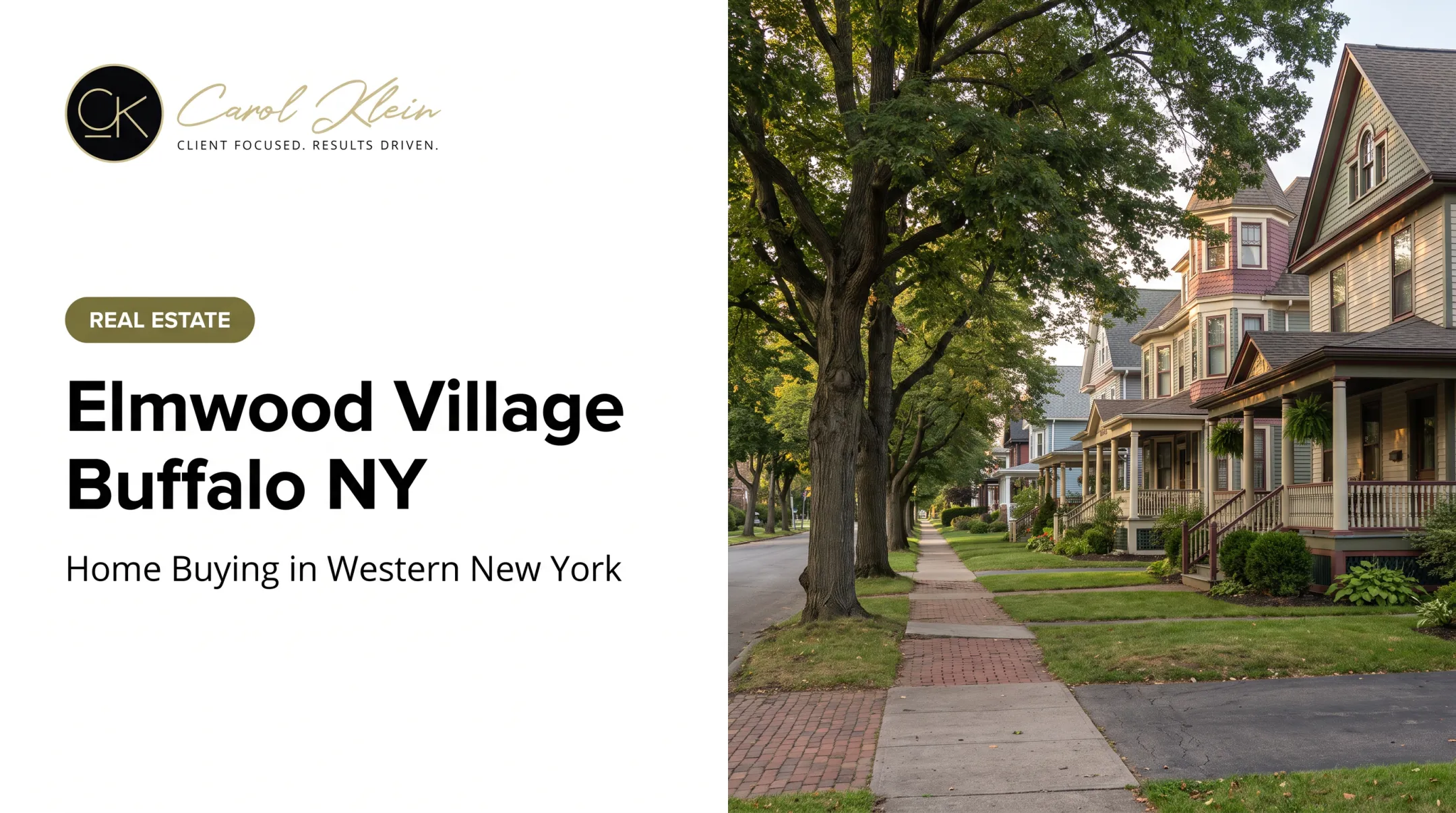
- Elmwood Village - Nearly 200 shops, restaurants, and galleries packed into a walkable strip, with Victorian and Queen Anne-style homes nearby
- Allentown - Arts-driven, nightlife-heavy, and full of historic housing with a strong LGBTQIA+ community presence
- North Buffalo - Hertel Avenue retail plus easy access to Delaware Park; recent neighborhood sales have trended around $369,000
- West Side - A diverse, immigrant-rich neighborhood with comparatively affordable housing
- Downtown - Loft apartments in converted factories, served directly by Metro Rail
- South Buffalo - McKinley Parkway Historic District with 5,000+ buildings per Buffalo Toronto Public Media, plus two Olmsted parks
Citywide, Buffalo scores a 67 Walk Score, 47 Transit Score, and 63 Bike Score, though individual addresses vary quite a bit from that average.
Nearby Suburbs and Communities
- Amherst and Williamsville - Larger suburban housing stock, strong schools, and a 2020-2024 median owner-occupied value around $311,600 in Amherst
- Cheektowaga and Depew - More affordable entry points, with Cheektowaga's median owner-occupied value near $185,000
- Lancaster and West Seneca - Established, family-oriented towns with moderate pricing
- Orchard Park - A larger Southtowns suburb with more retail and an easier Buffalo commute
- East Aurora - A walkable village roughly 20-25 minutes from Buffalo, known for its consistently top-ranked school district
- Clarence - The priciest suburb on this list, with a median owner-occupied value of $408,500
Neighborhood Comparison Checklist
Before narrowing your search, check each area for:
- Realistic commute time at rush hour, not just mileage
- Parking availability (street, driveway, or garage)
- Public transit access if you want to reduce car dependence
- School district boundaries, confirmed directly with the district
- Property tax rates specific to that municipality
- Flood or storm exposure history
- Overall housing condition and typical home age
- Proximity to grocery stores, healthcare, and daily errands
What Is Everyday Life Like in Buffalo?
Buffalo's identity runs deeper than its weather reputation, though the weather absolutely shapes daily routines.
Culture, Food, and Community
Buffalo's culinary scene genuinely rivals bigger metros, and that's before counting the breweries, neighborhood festivals, and passionate sports culture built around the Bills and Sabres. Add historic architecture, museums, and theaters, and the cultural options feel larger than the city's population would suggest.
Winter Reality Check
Buffalo's airport sees an average of 95.4 inches of snow annually, based on National Weather Service climate normals. Location still matters a lot.
Areas south of the city catch far more lake-effect snow than neighborhoods to the north, so a Southtowns suburb and a North Buffalo address can feel like different winters. Plan to budget for:
- Snow tires
- A snow blower or plow service
- Higher heating bills from November through March
Getting Around
A car is essential in most of the metro area. The NFTA runs roughly 53 bus routes and a single rail line connecting downtown to the University at Buffalo's south campus. That rail corridor, plus walkable pockets like Elmwood and downtown, means some residents genuinely can skip car ownership. Most suburban residents can't.

Jobs and Education
The Buffalo metro reported about 559,100 nonfarm jobs as of mid-2026. Major employers cluster in a few sectors:
- Healthcare: Kaleida Health, Catholic Health, Roswell Park
- Manufacturing: Moog, General Motors
- Finance and tech: M&T Bank, ACV Auctions
The University at Buffalo, Canisius University, and Buffalo State anchor the region's higher education and healthcare pipeline. Job prospects still vary a lot by industry and experience level, so research your specific field before assuming the broader numbers apply to you.
What Are the Pros and Cons of Living in Buffalo, NY?
The upside:
- Housing costs well below many large Northeastern cities
- A genuine, tight-knit community identity
- Strong food, arts, and brewery scene
- Easy access to Lake Erie, parks, and Niagara Falls
- Manageable mid-sized-city scale without big-city chaos
The tradeoffs:
- Harsh, snowy winters that demand real preparation
- Uneven public transit coverage outside the city core
- Car dependence in most suburbs
- Property taxes that add up, particularly in the city
- Aging housing stock that requires careful inspection
- Noticeable differences in amenities and services between neighborhoods
Buffalo tends to suit buyers who want more space for their money, people who genuinely enjoy community life and seasonal activities, and commuters who can work within the region. It requires more planning if you want to live car-free or you're chasing a major-city job market and nightlife scene.
How Should You Plan a Move or Home Search in Buffalo?
A good Buffalo-area home search starts well before you tour your first house.
- Set your real budget - factor in property taxes, insurance, and winter maintenance, not just the mortgage
- Visit neighborhoods at different times - a street feels different on a Tuesday morning versus a Friday night, and very different in February versus July
- Calculate your full commute - test drive times during actual rush hour
- Verify taxes and insurance directly - municipal rates and exemptions change by town
- Inspect older homes carefully - much of the region's housing stock is decades old
- Confirm school and service boundaries - check directly with the district, not just a map overlay
For sellers, a current comparative market analysis, accurate property valuation, and a clear negotiation strategy matter far more than an online estimate pulled from a generic algorithm.

This is where working with someone who knows Western New York block by block pays off. Carol Klein - Century 21 Northeast works with buyers, sellers, first-time purchasers, downsizers, and out-of-area relocators across communities like Buffalo, Amherst, Depew, Lancaster, and Orchard Park. The team provides market-informed valuations, personalized listings, and negotiation support throughout the process.
If you're weighing a move to the Buffalo area or thinking about selling, talk through your specific goals with a licensed Western New York REALTOR® before you start searching listings on your own.
Frequently Asked Questions
Is it expensive to live in Buffalo, NY?
Buffalo is more affordable than New York State overall, with a 2024 regional price index of 95.844 versus 107.921 statewide. Actual costs still depend heavily on your neighborhood, household size, and whether you rent or own.
What salary do you need to live comfortably in Buffalo, NY?
MIT's 2026 living-wage estimate for Erie County puts a single adult near $48,102 before taxes, rising for households with children, according to MIT's Living Wage Calculator. Your actual comfort level depends on debt, housing choice, and lifestyle.
What are the best neighborhoods to live in Buffalo, NY?
It depends on priorities. Elmwood Village and Allentown suit buyers who want walkability; East Aurora and Clarence suit families wanting space and schools; Depew or Cheektowaga suit buyers prioritizing affordability.
Is Buffalo, NY a good city to live in?
Buffalo offers strong affordability, culture, and community alongside tough winters and car dependence in many areas. Whether it's "good" depends on how much you value those tradeoffs against big-city amenities.
What are the pros and cons of living in Buffalo, NY?
Pros include attainable housing, community identity, and cultural offerings; cons include winter weather, uneven transit, and property taxes. The balance shifts noticeably between city neighborhoods and suburbs.
Is Buffalo, NY a wealthy area?
Not particularly at the city level: Buffalo's median household income is $50,041, well below Erie County's $72,839 and the state's $85,974. Wealth varies by neighborhood and suburb, with places like Clarence and Orchard Park well above the city average.