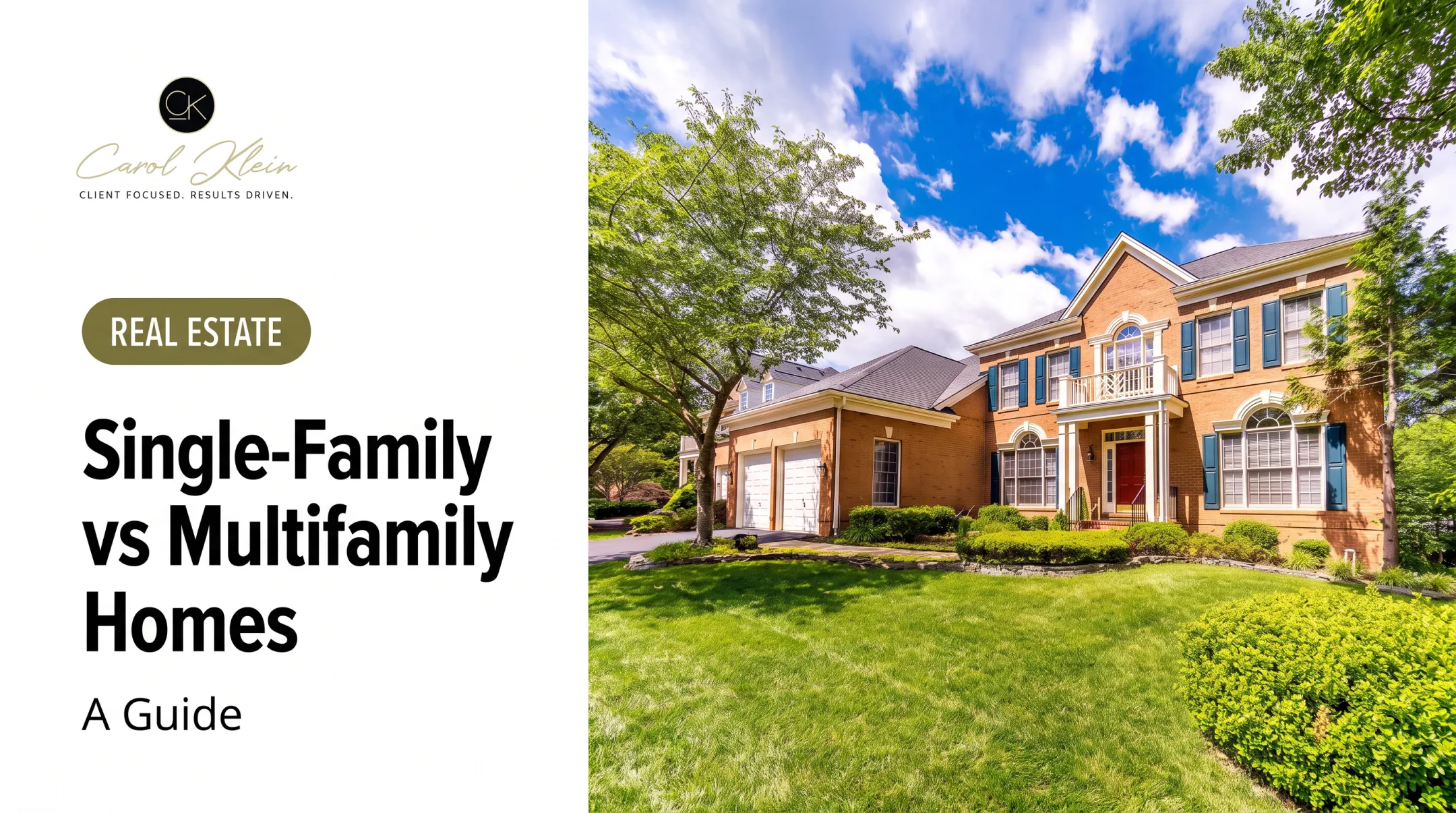
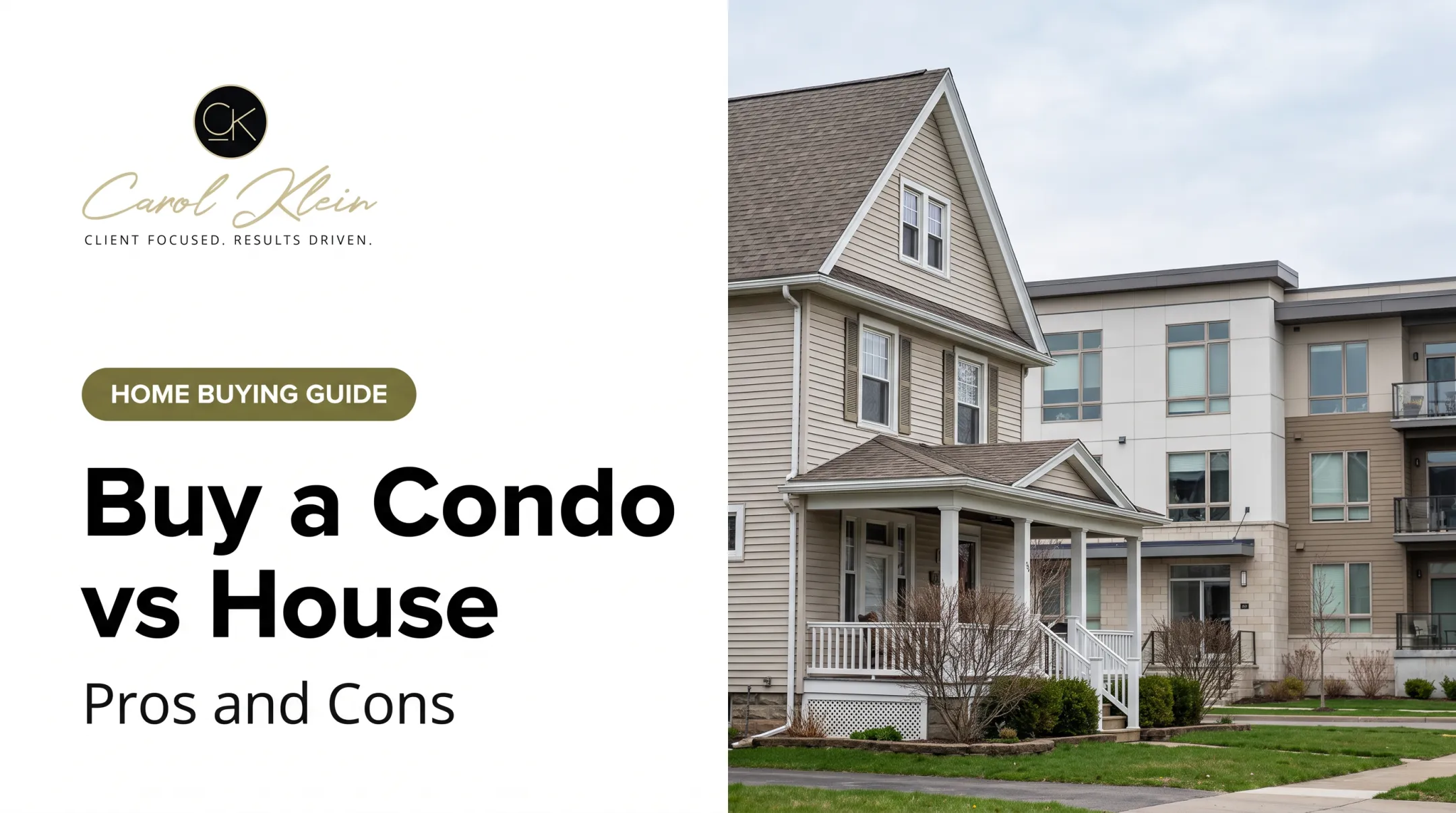
Many buyers assume a townhouse is just a cheaper, smaller version of a house. That's not quite right. A townhouse is typically an attached, multi-level home that shares one or two walls with neighbors, while a detached single-family house stands alone on its own lot with no shared walls at all.
The right fit depends on your budget, how much shared-wall living you can tolerate, your appetite for HOA rules, how much space you actually need, and where you expect to be in five or ten years. Below, we compare cost, maintenance, privacy, and resale potential side by side.
Key Takeaways
- Townhouses often cost less upfront and need less exterior upkeep, but HOA dues and rules come attached.
- Detached houses typically offer more privacy, yard space, and storage, with more maintenance responsibility in return.
- A townhouse isn't automatically a condo — check the deed, plat, and HOA documents before you offer.
- Compare full monthly costs, not just sale price, across both property types.
- A local, licensed agent can help you read HOA financials and gauge resale demand in your target neighborhood.
Townhouse vs. House: Quick Comparison
Here's how the two property types stack up across the factors that actually affect your wallet and your day-to-day life.
Cost
Townhouses often cost less to buy because they sit on smaller lots and share at least one wall with a neighbor, cutting down on land and construction costs. Nationally, the median townhouse price reached $357,000 in 2025, according to a New York Times report citing Zillow data.
That doesn't mean every townhouse beats every house on price. An older detached home in a quieter pocket of Western New York can easily undercut a newer townhouse with premium finishes. Location, size, age, and local supply move the number more than the property type alone.
HOA Fees and Recurring Expenses
Most townhouses belong to a homeowners association, meaning a monthly or annual fee on top of your mortgage. Before assuming what that fee buys you:
- Review the HOA budget and reserve fund
- Ask about the history of special assessments
- Confirm whether insurance, landscaping, or exterior repairs are included
- Check whether fees have increased recently, and by how much
Detached houses frequently skip HOA dues entirely, though some neighborhoods still charge a smaller fee for shared amenities or road upkeep. Without an HOA handling exterior work, you're budgeting directly for lawn care, snow removal, and eventual big-ticket replacements like a roof or furnace.

Maintenance and Responsibilities
Who fixes what in a townhouse depends entirely on the association's governing documents, not on the word "townhouse" itself. Some associations cover the roof and siding; others leave nearly everything to the owner. Always ask before you assume.
Detached house owners generally handle everything outside their walls: roof, siding, foundation, yard, drainage, and driveway, subject to local codes.
Space, Privacy, and Noise
Shared walls mean shared noise. Townhouses tend to run narrower and taller, often with smaller private yards and vertical floor plans, with bedrooms upstairs and living space down. Some developments offset this with communal green space or amenities like a pool.
Detached houses typically deliver more separation from neighbors, more square footage, and more storage. Fewer shared walls mean fewer surprise footsteps overhead at 10 p.m.
Flexibility, Location, and Resale
Townhouses often land buyers closer to urban centers or busy suburban corridors, trading yard space for walkability. The catch: HOA rules can restrict paint colors, rentals, parking, pets, or additions.
Detached houses give owners more room to add a deck or finish a basement, though zoning and permits still apply. In NAR's 2024 buyer survey, 75% of buyers purchased a detached single-family home, compared with 8% who bought a townhouse or row house (a snapshot of what buyers chose that year, not a resale guarantee).
| Factor | Townhouse | Detached House |
|---|---|---|
| Typical entry price | Often lower | Often higher |
| HOA dues | Usually yes | Usually no, but not guaranteed |
| Exterior upkeep | Shared, per declaration | Owner's responsibility |
| Privacy | Shared walls | More separation |
| Renovation freedom | Limited by HOA rules | Broader, subject to permits |
What Is a Townhouse?
A townhouse is an individually owned home that usually shares one or both side walls with the unit next door, often spread across two or three levels. That's a description of physical form, not legal ownership — a distinction many buyers miss.
A townhouse is not automatically a condo. You might own the unit and the land under it outright through fee-simple ownership, or you might own the interior while a condo association owns the structure and common areas. The deed, plat, and declaration spell out which one applies to your purchase.
Townhouses can offer:
- A lower entry price than a comparable detached home nearby
- Less private yard work, since the HOA often handles shared grounds
- Access to amenities like a pool, gym, or clubhouse
- A foothold in walkable or convenient locations
The trade-offs are real too: shared-wall noise, stairs, smaller outdoor space, HOA dues, and restrictions on renovations, rentals, or exterior changes.
Use Cases of a Townhouse
Townhouses tend to suit:
- First-time buyers who want a more accessible entry point into ownership
- Buyers who'd rather pay dues than mow a lawn every weekend
- Downsizers looking for a lock-and-leave lifestyle
- Anyone who values a convenient location or shared amenities over a large private yard
In Orchard Park, for example, newer townhouse developments sit alongside modern condos and traditional single-family listings, giving downsizers and first-time buyers a genuine alternative in a competitive school district.
Before making an offer, walk the property at different times of day to gauge wall noise, check storage and stair layout, confirm parking, and read the pet and rental rules. Ask who's responsible for the roof, windows, and exterior — the answer isn't always obvious.

What Is a House?
A detached single-family house stands alone on its own lot, with no shared walls. Ownership typically includes both the structure and the land beneath it, though easements and neighborhood restrictions still deserve a professional review.
Benefits worth weighing:
- More privacy and separation from neighbors
- More outdoor space, storage, and room to grow
- Broader renovation possibilities, from additions to finished basements
- Room for pets, hobbies, a home office, or entertaining
Trade-offs to plan for:
- Higher purchase or carrying costs in some markets
- Full responsibility for repairs, landscaping, and major systems
- Potentially higher utility costs for a larger footprint
- Budgeting a maintenance reserve for unplanned repairs
Don't assume complete freedom, either. Detached homes can still fall under an HOA, zoning rules, historic-district requirements, or rental restrictions. Check before you plan that addition.
Use Cases of a House
Detached houses tend to work best for:
- Growing families who need extra bedrooms and yard space
- Buyers who want control over landscaping, exterior appearance, and parking
- Owners planning long-term renovations or outdoor structures
- Anyone prioritizing privacy over proximity to dense urban amenities
Many single-family listings in Lockport feature large yards, multiple bedrooms, and basements or garages : the kind of room to grow that buyers in Alden and similar Western New York communities often prioritize once they outgrow a smaller home.
Townhouse vs. House: What's Better?
Neither option wins by default. The right call depends on the specific property, the HOA (if there is one), the neighborhood, your financing, and how long you plan to stay.
Choose a townhouse if you prioritize a lower purchase price, less exterior upkeep, shared amenities, or a convenient location, and you're comfortable with HOA dues and rules.
Choose a detached house if you prioritize privacy, a larger yard, storage, or control over renovations, and you can handle the extra maintenance and repair costs yourself.
Compare the Full Monthly Picture
Sale price alone tells you almost nothing. Build a sample budget that includes:
- Mortgage principal and interest
- Property taxes and homeowners insurance
- HOA dues, if applicable
- Utilities and routine maintenance
- A reserve for capital repairs or special assessments
A mortgage calculator that factors in taxes, insurance, and monthly HOA fees makes this comparison far clearer than eyeballing two listing prices side by side.
A Western New York Example
In Lancaster, NY, a roughly $350,000 budget in 2026 could buy a newer low-maintenance townhome, a move-in-ready single-family home around 1,600 to 2,000 square feet, or an older home with more land. Those are three genuinely different trade-offs at a similar price point.

A buyer who hates yard work leans toward the townhome. A buyer who wants a dog, a garden, and room to add a deck leans toward the house.
Before you make an offer on either, inspect the property's condition, compare recent nearby sales, and, for a townhouse, review the HOA's financials and meeting minutes. Ask your lender and your attorney how each option affects your closing costs and ongoing obligations.
Not sure which direction fits your budget and your five-year plan? Carol Klein - Century 21 Northeast works with buyers across East Aurora, Orchard Park, Lancaster, Buffalo, and Amherst, comparing real HOA documents and recent comparable sales so you're deciding on facts, not guesses. Call (716) 671-3344 to start the conversation.
Conclusion
A townhouse often makes sense when affordability, convenience, and lower-maintenance living matter most to you. A detached house tends to win out when privacy, space, and full control over your property top the list.
Don't lean on assumptions about "all townhouses" or "all houses." Every HOA is different. Every lot is different. Every inspection report tells its own story.
Before you write an offer:
- Review the HOA documents if there are any
- Read the inspection findings carefully
- Confirm your financing terms
- Think honestly about where you'll be in five years
That homework, more than the property type on the listing, determines whether you'll be happy with your choice a year from now.
Frequently Asked Questions
Why are townhouses so much cheaper?
Townhouses often cost less because they sit on smaller lots, share walls with neighbors, and use space efficiently. Location, size, condition, HOA dues, and local demand can narrow or even flip that gap.
Can I afford a $300,000 house on a $50,000 salary?
It depends on your debt, credit, down payment, and the lender's standards, not your salary alone. Fannie Mae's underwriting guidelines typically cap total debt-to-income around 36%, sometimes higher — get a personalized pre-approval instead of relying on a salary rule.
Which is better, a townhouse or a single-family home?
A townhouse tends to suit buyers prioritizing affordability and lower maintenance, while a single-family home suits those wanting privacy and yard space. Compare your full budget and long-term needs rather than picking a category.
Is a townhouse a better investment than a house?
Investment potential depends on location, purchase price, HOA health, rental rules, and local buyer demand. Neither property type reliably outperforms the other everywhere, so research your specific market first.
Can you hear through walls in a townhouse?
Sound transmission varies with construction quality, insulation, and which unit you're in. Visit at different times of day, ask about known noise issues, and review inspection findings before signing anything.