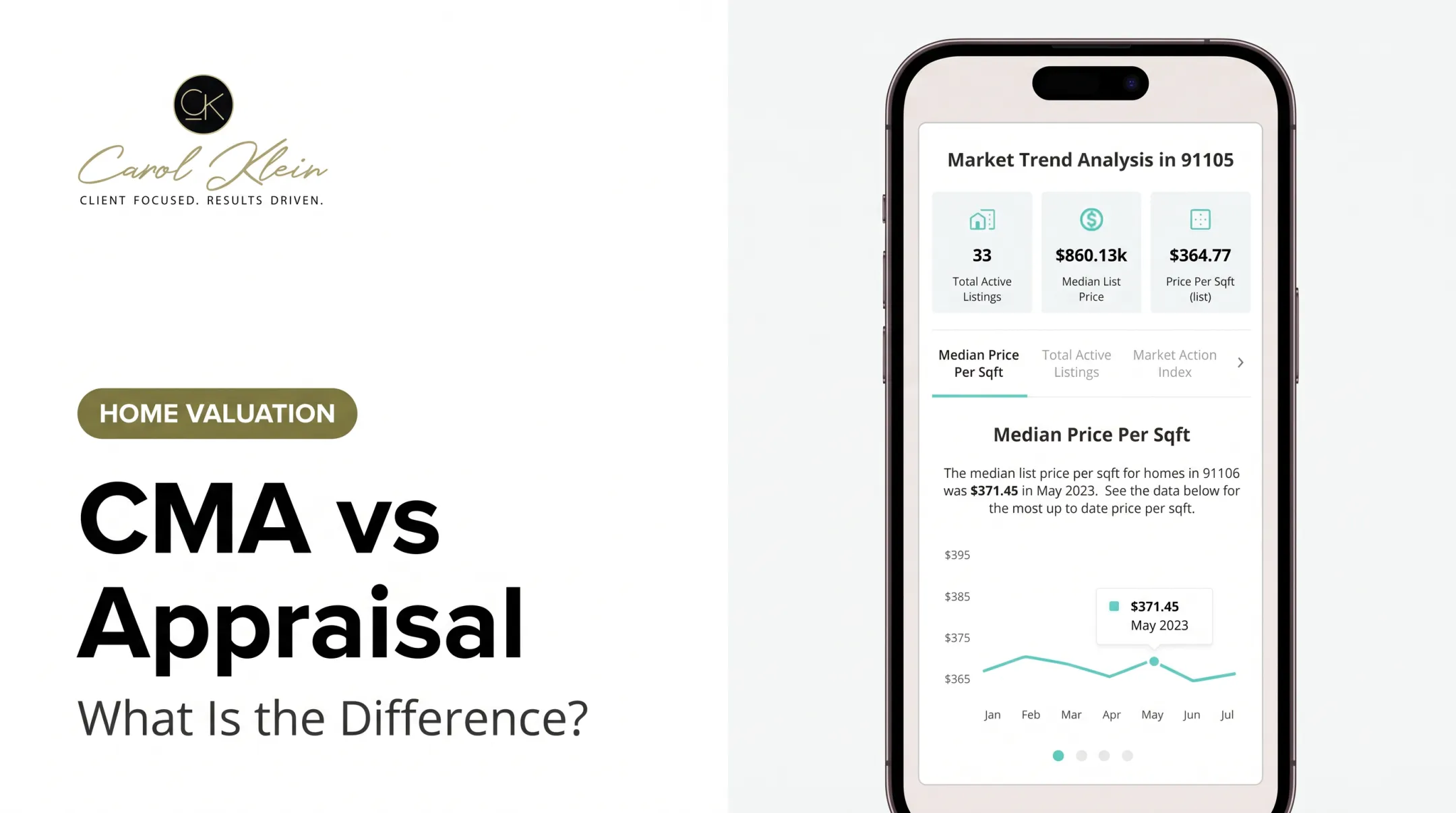
A comparative market analysis, or CMA, cuts through that noise. It's a market-based tool built from comparable properties, actual sales data, and current local conditions, not an algorithm guessing from a distance.
This article breaks down how a CMA works, what it typically includes, how it differs from a lender-ordered appraisal, and how homeowners in Western New York can request one from a local real estate professional.
Key Takeaways
- A CMA estimates likely market value by comparing a home with similar nearby properties and recent sales activity
- Sellers use it to set a competitive listing price; buyers use it to evaluate an asking price or shape an offer
- It's an agent's informed opinion of value, not a guaranteed sale price or a replacement for an appraisal
- Report quality depends on comp relevance, accurate property details, and the agent's grasp of local conditions
What Is a CMA and Why Does It Matter?
A comparative market analysis is a licensed agent's estimate of a property's likely market value, based on similar homes that have sold, are pending, or are currently listed nearby. According to NAR's 2025 guide, agents use this analysis to recommend a listing price grounded in real market evidence. Most CMAs produce a supported price range rather than one exact figure.
What Counts as a Comparable Sale
A "comp" is a similar property that recently sold nearby. Relevant similarities include:
- Location and neighborhood
- Property type, size, and lot
- Age and overall condition
- Bedroom and bathroom count
- Upgrades, renovations, and notable features
The closest house on the street isn't automatically the best comp. A nearby home with a gutted kitchen and finished basement tells a different pricing story than the subject property.
Who Relies on a CMA
Sellers use a CMA to avoid pricing too high or too low. Overpricing slows a sale and changes buyer behavior.
Zillow Research found homes listed 12% or more above estimated market value were nearly 50% less likely to sell within 60 days compared with homes priced closer to that estimate.
Buyers use the same data to judge whether a listing is fairly priced. That evidence supports a negotiation strategy instead of relying solely on the seller's number or an automated online estimate.
Other common uses include:
- First-time buyers comparing a target home against similar recent sales
- Households relocating into or out of Western New York
- Downsizing sellers planning their next move
- Heirs or executors evaluating an inherited property before listing
How Is a CMA Prepared?
Online estimates alone do not make a CMA. A real analysis combines property facts, comparable-sale data, MLS information where available, current market conditions, and the agent's professional judgment.
Here's how that process typically unfolds:
- Define the subject property and the goal. The agent gathers the address, square footage, lot size, bedroom and bathroom count, age, condition, renovations, and the purpose of the analysis, whether that's listing, buying, or estate planning.
- Study the immediate market area. This includes neighborhood boundaries, schools, taxes, amenities, nearby competing listings, and location factors like traffic, noise, or views.
- Identify and screen comparable properties. Recent closed sales carry the most weight because they show what buyers actually paid. Active and pending listings add context about current competition, but they aren't confirmed final prices.
- Adjust for meaningful differences. Condition, updates, square footage, garage or basement space, and layout all factor in. Good adjustments are evidence-based, not simply the cost of the improvement itself.
- Reconcile everything into a price range. The agent weighs the strongest comps, current competition, market pace, and the client's goals to recommend a realistic range and strategy.

Where CMAs Go Wrong
Common oversights include:
- Relying on sales that are months old in a shifting market
- Ignoring condition differences between the subject and its comps
- Leaning on price-per-square-foot alone without context
- Failing to question an unusually low or high sale price
A Quick Example
Picture a three-bedroom colonial. The agent pulls four nearby sales from the past few months. Two match closely on size and layout. One has a renovated kitchen the subject lacks. One backs up to a busier road.
Those differences shift the range by weighing what buyers actually paid for comparable features. The result might point toward a listing price recommendation, an offer strategy for a buyer, or a decision to complete a few repairs before going on the market.
What Does a CMA Report Include and How Accurate Is It?
A typical CMA report opens with a subject-property summary: address, specifications, lot and building details, notable improvements, and the date the analysis was prepared.
From there, it leans heavily on sales evidence:
| Listing Status | How It's Used |
|---|---|
| Closed/sold | Shows what buyers actually paid; strongest pricing indicator |
| Pending | Offers context on current competition, not a confirmed final price |
| Active | Shows what sellers are asking, not what buyers have agreed to pay |
Most reports also include:
- List and sale prices with sale dates
- Days on market when available
- Property condition and features
- Financing or concession context
- The agent's commentary
Why the Range Shifts Over Time
Inventory levels, buyer demand, seasonality, interest rates, and new local development all affect how relevant a CMA stays. The Buffalo Niagara Association of REALTORS® reported a regional MLS report showing a median sale price of $305,000 in July 2026, up from $285,000 a year earlier, with inventory up nearly 20% over the same period. A CMA built on last year's comps wouldn't reflect that shift.

Where Accuracy Can Break Down
A CMA is only as strong as its inputs. Accuracy suffers when:
- Comps are weak or too dissimilar
- Public records are incomplete
- Hidden defects or unreported improvements go unnoticed
- Unusual sale motivation, such as a distressed seller
- Micro-location factors, such as a busy corner lot, get overlooked
Ask your agent why each comp was selected, what adjustments were made, and what evidence supports the recommended range. Online valuation tools and DIY estimates can offer a starting reference point, but they often miss MLS-level condition details, renovations, and local transaction nuances that an agent catches firsthand.
How Carol Klein - Century 21 Northeast Can Help
Pricing a home correctly takes more than a website estimate. Carol Klein - Century 21 Northeast is a licensed, client-focused real estate team serving buyers and sellers across Western New York, including Buffalo, Amherst, Clarence, Depew, Cheektowaga, Orchard Park, and Williamsville.
The team offers a free home valuation and market analysis, available online or by reaching out directly. That analysis covers:
- Comparable home data pulled from relevant, recent sales
- Current market value and equity insight
- Local market trends specific to your neighborhood
Whether you're a first-time buyer evaluating a listing, a downsizing seller, or an heir sorting out a family property, the team starts with your property's details. They evaluate the comps that actually apply to your situation, then connect that analysis to a practical pricing, preparation, or negotiation plan.

If you're wondering what your Western New York home might be worth in today's market, reach out to the Carol Klein team to start that conversation.
Conclusion
A comparative market analysis turns comparable-sales data and local market knowledge into a practical estimate you can act on, whether you're setting a listing price or shaping an offer.
It's not an appraisal and it's not a guarantee. Its value depends entirely on accurate property information, relevant comps, thoughtful adjustments, and current market context.
Before you list, buy, or make a major pricing decision, review your CMA with an experienced local REALTOR® and treat it as one part of a broader strategy, not the final word.
Frequently Asked Questions
How much does a home market analysis cost?
Pricing varies by professional and situation. Many agents include a CMA as part of a buyer or seller service relationship at no separate charge. Confirm any standalone fee before requesting one.
How do I get a comparative market analysis on my home?
Contact a licensed local real estate agent and share your property's details. They may arrange a brief visit or review, then walk you through the resulting price range and the reasoning behind it.
What is comparative market analysis?
A CMA estimates a property's likely market value by comparing it with similar local homes and relevant recent sales activity. It's typically presented as a supported price range rather than one fixed number.
What is the purpose of a market analysis in real estate?
It guides sellers on listing price, helps buyers evaluate an asking price and shape offers, and supports better-informed decisions around timing and property preparation.
What is a comparable sale?
A comparable sale, or "comp," is a similar property that recently sold nearby. Relevance depends on factors like location, size, condition, features, and how recently the sale closed.
Who typically prepares a comparative market analysis?
Licensed real estate agents or brokers prepare CMAs, drawing on MLS access where available, public sales data, and firsthand knowledge of local market conditions.