Introduction
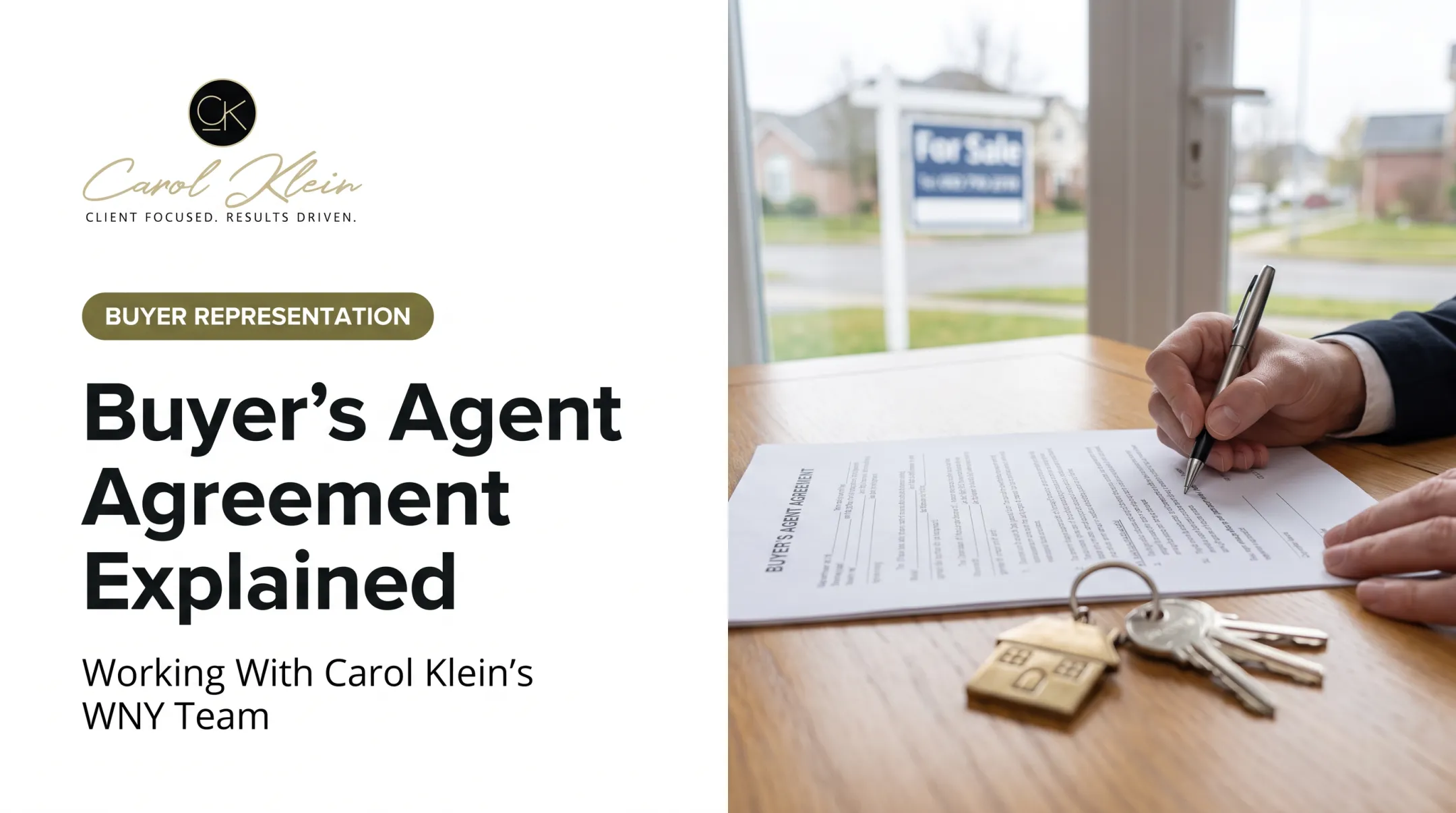
An exclusive right-to-sell listing agreement gives one brokerage the sole authority to market your home. In most cases, you'll owe the agreed compensation if it sells during the contract term, regardless of who finds the buyer.
That single clause trips up a lot of sellers. Many homeowners sign without fully grasping what "exclusive" really commits them to, especially when a friend, neighbor, or former coworker turns out to be the eventual buyer.
This guide is written for New York homeowners, including sellers across Western New York, who are staring at a listing agreement and need plain answers before they sign. It covers your obligations, the broker's role, and the financial consequences.
You'll learn how the agreement works from start to close, what to check before signing, how it compares to other listing types, and when to call a licensed New York real estate professional or attorney.
Key Takeaways
- Exclusive right-to-sell agreements typically require paying the listing brokerage if the home sells during the term, even when the seller finds the buyer.
- The written contract, not a verbal explanation from your agent, governs the listing period, compensation, services, and cancellation terms.
- Exclusive agency and open listings handle seller-found buyers differently, and the compensation stakes vary by arrangement.
- Request a written marketing plan and confirm fees, termination rights, and New York disclosure compliance before you sign.
What Is an Exclusive Right-to-Sell Listing Agreement in New York?
In plain terms, it's a contract between a property owner and a real estate broker or brokerage. The broker agrees to market and represent the property for a set period in exchange for exclusive authority over the listing.
The goal is a coordinated sale process: pricing strategy, prepping the home, marketing, showings, offer evaluation, negotiation, and transaction management through closing. None of that guarantees a sale or a specific price. It just defines who's running the process and under what terms.
How Compensation Is Defined
New York regulation requires brokers to attach a written explanation of compensation terms to exclusive residential listing agreements, printed in at least 6-point type and signed or initialed by the owner, according to New York's listing regulations. That explanation should spell out:
- The total compensation amount or formula
- Who is entitled to receive it (listing broker, cooperating broker, or both)
- When it's considered earned under the contract
- How any buyer-side compensation offer or seller concession is handled
Exclusive Right-to-Sell vs. Exclusive Agency
The two are easy to confuse, but they treat a seller-found buyer very differently:
| Listing Type | Seller Finds the Buyer | Another Broker Finds the Buyer |
|---|---|---|
| Exclusive Right-to-Sell | Compensation is typically still owed | Compensation is owed |
| Exclusive Agency | No compensation owed to the listing broker | Compensation owed to listing and cooperating broker |
"Exclusive listing" gets used loosely in everyday conversation. Don't assume which type you're being offered. Ask directly, and read the operative clauses yourself rather than relying on the label.
How the Agreement Works From Signing to Closing
A typical Western New York sale moves through three phases: Pre-Sale, For Sale, and Sale Pending.
- Pre-Sale: Consultation & Planning. Interview the agent, review and sign the listing agreement, complete a comparative market analysis, and prep the home with professional photos, a lockbox, and yard signage.
- For Sale: Marketing & Showings. The listing hits the MLS and syndicates to sites like Zillow, Trulia, and Realtor.com, while an appointment center schedules showings and the team fields offers.
- Sale Pending: Contract to Close. Negotiate offers, obtain attorney approval for both sides, and work with a transaction coordinator who manages the file through closing.

What You're Expected to Provide
Sellers typically need to supply:
- Accurate property details
- Reasonable access for showings
- Required disclosure materials, including New York's Property Condition Disclosure Statement before a buyer signs a contract
- Timely responses to inspection, appraisal, and title requests
Confirm your specific obligations against the actual contract language.
If You Find the Buyer Yourself
Here's the catch many sellers miss: under an exclusive right-to-sell agreement, bringing your own buyer to the table during the term usually doesn't get you out of paying the agreed compensation. Don't take anyone's word for it. Verify the exact trigger language in your contract, and ask an attorney if it's unclear.
When the Term Ends
New York bars exclusive listing contracts from automatically rolling past their stated expiration date, so any extension needs to be in writing. Many agreements also include a post-expiration protection period covering buyers who were introduced during the listing term.
The length and exceptions to that period vary by contract, so check the duration, any carve-outs, and notice requirements before assuming you're free to sell independently once the term ends.
Key Terms and Factors to Review Before Signing
Before you sign anything, check these basics for accuracy:
- Parties named and property description
- Listing price or the process for setting it
- Effective date and expiration date
- Brokerage identity and supervising broker information
- Confirmation you have legal authority to sign (important for estates or co-owned property)
Compensation and Cooperating-Broker Pay
Compensation is negotiable, not a fixed industry rate. The contract should state the amount, when it's earned, and how concessions affect it.
Since August 2024, MLS participants covered by the NAR settlement must get the seller's written, dollar-specific approval before offering to pay a buyer's agent. That offer can't be advertised directly on the MLS, according to NAR's settlement FAQ.

Cancellation, Renewal, and Marketing Plan
Review the termination clause closely:
- Can either side cancel without cause, and what notice is required?
- Are there early-release fees, and are they tied to actual work performed?
- Does the contract extend automatically, or require a new signature?
Ask for a written marketing plan that covers:
- Listing launch and professional photography
- MLS and online exposure
- Showings, open houses, and feedback cadence
- Offer updates and price-review checkpoints
Don't accept vague promises about "aggressive marketing" without specifics on paper.
If you're weighing a listing anywhere from East Aurora to Orchard Park to Lancaster, the licensed team at Carol Klein - Century 21 Northeast can walk through a market-informed valuation and a written marketing strategy with you before you sign.
Common Issues, Misconceptions, and When It May Not Be Appropriate
The biggest misconception: exclusivity doesn't guarantee a buyer, a sale price, or a timeline. It defines the relationship, authority, and compensation framework, nothing more.
Common disputes tend to center on:
- Compensation language that's vague or contradicts verbal promises
- Marketing expectations that weren't confirmed in writing
- Missed expiration dates or confusion over automatic extensions
- Cancellation disagreements, especially around early-release fees
- Post-termination claims involving buyers introduced during the listing
New York's Department of State has disciplined brokers over exactly these issues, including excessive early-release charges unrelated to actual services performed.
Commission timing is a separate issue. A broker can earn a commission once they produce a ready, willing, and able buyer on acceptable terms, which isn't always the same moment as closing, per the DOS commission memo.

Those risks also explain when an exclusive right to sell may be the wrong fit.
Be especially careful if:
- You expect to market the home independently
- You're not fully committed to selling yet
- The property has multiple owners or estate-related authority questions
- The transaction involves unusual terms you don't fully understand
In any of these cases, compare listing types and get independent legal review rather than signing out of habit.
Conclusion
An exclusive right-to-sell agreement sets up a defined working relationship with one brokerage. In exchange for coordinated marketing, negotiation, and transaction support, you take on a contractual commitment to pay if the home sells during the term.
What matters most are the contract details themselves:
- Compensation language and when a fee is owed
- Listing term and cancellation rights
- Any protection period after the listing ends
- Services promised and your responsibilities as the seller
Those terms define the deal more than the label on the form.
Choose an agent based on communication, local market knowledge, and a marketing strategy you trust, then read every provision before you sign. You are making a legal commitment, so give each clause real attention.
Frequently Asked Questions
What is an exclusive right to sell listing agreement?
It's a contract giving one brokerage exclusive authority to market your home. Compensation is typically owed if the property sells during the term, even if you find the buyer yourself, subject to the exact written terms.
Can I cancel an exclusive right to sell?
Cancellation depends entirely on your contract's termination clause, notice requirements, and any negotiated fees. Get any cancellation agreement in writing and consult a New York attorney if a dispute comes up.
What is the difference between an exclusive listing and an exclusive right to sell?
"Exclusive listing" is an informal, catch-all term. An exclusive right-to-sell agreement specifically addresses the broker's exclusive authority and compensation regardless of who produces the buyer, so always confirm which type you're signing.
Why do brokers prefer the exclusive right to sell agreement?
It gives the brokerage clearer authority and financial protection for the time, marketing dollars, and negotiation work invested in the listing. Terms still vary by broker and brokerage, so don't assume every agreement looks identical.
Why would a seller want an exclusive listing?
Benefits can include one accountable point of contact, coordinated marketing, professional pricing guidance, and clearer expectations throughout the sale. Compare terms across brokerages and choose a New York professional you trust before committing.