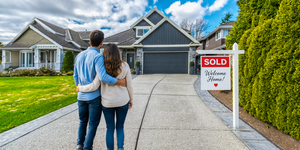
Circle prospecting in real estate is a lead generation strategy where an agent reaches out to homeowners in a specific area, usually the neighborhood surrounding a home that just sold or hit the market, to share local market activity and ask whether they or anyone they know is thinking about buying or selling. If you have ever received a call, postcard, or knock at the door from an agent shortly after a "Sold" sign went up nearby, that was circle prospecting in action. This guide breaks down exactly what circle prospecting is, how agents use it, why it works, and what it means whether you are a homeowner receiving the outreach or an agent building the strategy into your own business.
Key Takeaways
Circle prospecting means an agent contacts homeowners within a defined radius, usually 20 to 80 homes, around a recently sold or newly listed property.
It is different from cold calling because the outreach is tied to real, local activity that homeowners are already curious about, such as what a neighbor's home just sold for.
The goal is relationship building over time, not an immediate transaction. Most homeowners contacted are not ready to move right away.
Common methods include phone calls, direct mail, door knocking, and follow-up emails, often used together rather than alone.
Circle prospecting benefits homeowners too. It is one of the ways you learn what your own home might be worth without having to ask.
Agents who circle prospect consistently tend to become the go-to resource in a neighborhood, which is part of why you may hear from the same agent more than once.
Why Circle Prospecting Matters, Whether You're an Agent or a Homeowner
Real estate activity in a neighborhood rarely stays quiet. When a home sells, nearby owners naturally wonder what it sold for, how it compares to their own property, and whether now might be a good time to consider their own move. Circle prospecting exists because that curiosity is real, and a good agent uses it to start a genuinely useful conversation rather than a cold, generic sales pitch.
For agents, this matters because it produces warmer conversations than random cold calling. You are not calling a stranger out of nowhere. You are reaching someone who already has a reason to be interested in what you are telling them, which naturally lowers the resistance you would otherwise face. For homeowners, it matters because the outreach you receive is often the fastest way to learn what is actually happening with home values in your own neighborhood, sometimes well before you would think to ask.
Here in Western New York, this plays out constantly across close-knit communities like East Aurora, Orchard Park, and Lancaster, where a single sale can genuinely shift what neighbors think their own home is worth. If you want to see current activity in your area firsthand, you can browse recent listings through the Western New York home search at any time.
How Circle Prospecting Actually Works
The process is more structured than it might first appear. Here is the typical sequence an agent follows:
Start with a real event. The agent identifies a recently sold, newly listed, or pending property, or an upcoming open house, to use as the reason for outreach.
Draw the circle. The agent defines a geographic radius around that property, commonly a quarter mile to one mile, or a specific number of nearby homes, often somewhere between 20 and 80.
Build an accurate contact list. Using property records and neighborhood data, the agent compiles homeowner names, addresses, and contact information for everyone inside that circle.
Reach out with something of value. Rather than opening with a sales pitch, the agent leads with information the homeowner actually wants: what the nearby home sold for, how fast it moved, or general trends affecting the neighborhood.
Ask a simple, low-pressure question. The agent asks whether the homeowner has thought about selling, or knows anyone who has, without pushing for an immediate answer.
Follow up consistently. Because most homeowners are not ready to move right away, the agent stays in touch over months or years, so they are the first call when the timing is finally right.
Circle Prospecting vs. Cold Calling and Farming
These terms overlap, but they are not the same thing, and understanding the difference clarifies why circle prospecting tends to work better than a plain cold call.
Cold calling means contacting people with no specific reason tied to their situation or their neighborhood. It is the least targeted approach and typically produces the coolest reception.
Circle prospecting means contacting homeowners in a defined area with a specific, timely reason: a nearby sale, listing, or open house. It borrows the low resistance of a warm lead while still reaching people who have not raised their hand.
Geographic farming means an agent consistently markets to the same neighborhood over a long period, regardless of any single event, to become the recognized local expert. Circle prospecting is often one tactic used inside a broader farming strategy, triggered specifically by real activity rather than a set schedule.
The practical distinction is that circle prospecting always has a timely, local hook. That hook is what makes the conversation feel relevant instead of intrusive.
What Circle Prospecting Means If You're a Homeowner
If an agent reaches out to you using circle prospecting, you are not being singled out. You are simply part of a neighborhood where something recently happened that gave the agent a reason to connect. There is genuine value on your side of that conversation too.
You get real market information. A well-run circle prospecting call or mailer usually includes specific, local numbers, such as what a nearby home actually sold for, not vague generalities.
You learn your home's context for free. Understanding recent activity near you is one of the simplest ways to gauge where your own home's value may be heading, without commissioning a formal appraisal.
You are not obligated to do anything. A good agent is not expecting you to list your home on the spot. Most homeowners contacted this way are simply being kept informed for whenever the time is right.
You can ask questions. If you are curious what your home might be worth in the current market, this kind of outreach is a natural, low-pressure moment to ask.
If you have received this kind of outreach from Carol Klein's team, it is because a nearby home recently sold or listed, and we wanted you to have that information directly rather than hear about it secondhand.
What Circle Prospecting Means If You're an Agent
For agents, circle prospecting is one of the most reliable ways to keep a lead pipeline active without relying entirely on ads or referrals. A few principles separate the agents who do it well from those who burn through a list without results.
Keep the circle tight. A smaller, well-chosen circle of 20 to 50 homes tends to outperform a broad, unfocused area, because everyone contacted genuinely has a vested interest in the nearby sale.
Lead with value, not a pitch. Homeowners respond better to specific, useful market information than to an obvious sales approach.
Mix your outreach methods. Combining phone calls, direct mail, and follow-up emails or texts tends to work better than relying on a single channel.
Track everything. A real estate CRM keeps your contacts, notes, and follow-up timing organized, which matters enormously given how long-term this strategy is.
Expect a long game. Conversion rates from any single round of circle prospecting are modest. The strategy pays off through consistency over months and years, not a single call.
Practical Tips for Getting the Most Out of It
Time your outreach to real events. A closing, a new listing, or an open house all give you a legitimate, current reason to reach out.
Respect the Do Not Call Registry. Always check your contact list against it before making calls, both for compliance and for your reputation in the community.
Personalize the message. Referencing the specific street or the specific sale makes the outreach feel local and credible instead of generic.
Give homeowners an easy next step. Whether that is a follow-up email list, a market report, or simply an open invitation to ask questions, make it easy to stay in touch.
Be patient with the follow-up. Most people you reach are not ready to sell today. The value comes from remaining the trusted local contact when they eventually are.
Things to Know
Circle prospecting is not limited to phone calls. Door knocking, mailers, and even yard signs in a nearby seller's yard technically fall under the same strategy.
The typical conversion rate from circle prospecting efforts is modest, generally in the low single digits, which is why consistency over time matters more than any one outreach round.
Best response times for prospecting calls tend to cluster in the late morning and late afternoon, and most agents avoid early mornings, lunch hours, and evenings out of respect for homeowners.
A recent sale is not the only trigger. Some agents circle prospect around new construction, upcoming developments, or even seasonal market shifts.
Circle prospecting works best as part of a broader relationship, not a one-time contact. Homeowners who hear from the same agent consistently, with useful information each time, are more likely to think of that agent when they are ready to sell.
Ready to Get Real Market Information for Your Neighborhood?
If you have ever wondered what a nearby home actually sold for, or what that means for your own property's value, you do not need to wait for a call to find out. Carol Klein of Century 21 Northeast is a Top 1% agent in East Aurora and across Western New York, known for keeping local homeowners genuinely informed with local insight, smart pricing, and trusted guidance under the promise "Client Focused. Results Driven."
Whether you live in East Aurora or anywhere across Erie or Niagara County, reach out any time, no pressure and no obligation. Call (716) 671-3344 or visit the contact page to ask what is happening with home values in your specific neighborhood.
Frequently Asked Questions
Is circle prospecting the same as cold calling? Not exactly. Cold calling reaches people with no specific connection to their situation, while circle prospecting is tied to a real, local event, such as a nearby home sale or new listing. That local relevance tends to make the conversation feel more natural and less intrusive than a typical cold call.
How large is a typical circle prospecting area? Most agents work within roughly a quarter mile to one mile of the trigger property, or target a specific number of nearby homes, often somewhere between 20 and 80. Smaller, more focused circles tend to perform better than large, unfocused ones because everyone contacted has a genuine connection to the area.
Why did I get a call or postcard from an agent I don't know? It is very likely tied to a recent sale or new listing near your home. Agents use that activity as a natural, timely reason to reach out and share market information, not because you were specifically targeted for any other reason.
Do I have to respond if an agent contacts me this way? No. Most homeowners contacted through circle prospecting are not ready to sell, and a professional agent understands that. It is simply an opportunity to receive local market information, and you are free to ask questions or simply take note for later.
Is circle prospecting effective for real estate agents? Yes, when done consistently and paired with genuinely useful information rather than a hard sales pitch. It tends to outperform plain cold calling because it starts from real local activity homeowners are already curious about, though results build gradually over months and years rather than overnight.
The Bottom Line on Circle Prospecting
Circle prospecting is simply a smarter, more relevant way for agents to stay in touch with a neighborhood: focusing outreach around real activity, like a nearby sale or new listing, rather than reaching out at random. For homeowners, it is often the easiest way to learn what is happening with home values nearby, without having to go looking for the information yourself. For agents, it is one of the most dependable ways to build long-term relationships that eventually turn into listings, provided the outreach stays genuinely helpful rather than pushy.
If a recent sale near you has you wondering what your own home might be worth, there is no need to wait for a call. Carol Klein of Century 21 Northeast is ready to share real, local market information whenever you are curious. Call (716) 671-3344 or visit the contact page to start the conversation.